Tiny Board, Big Dreams: How Indie Creators Are Hacking Their Way to Media Independence
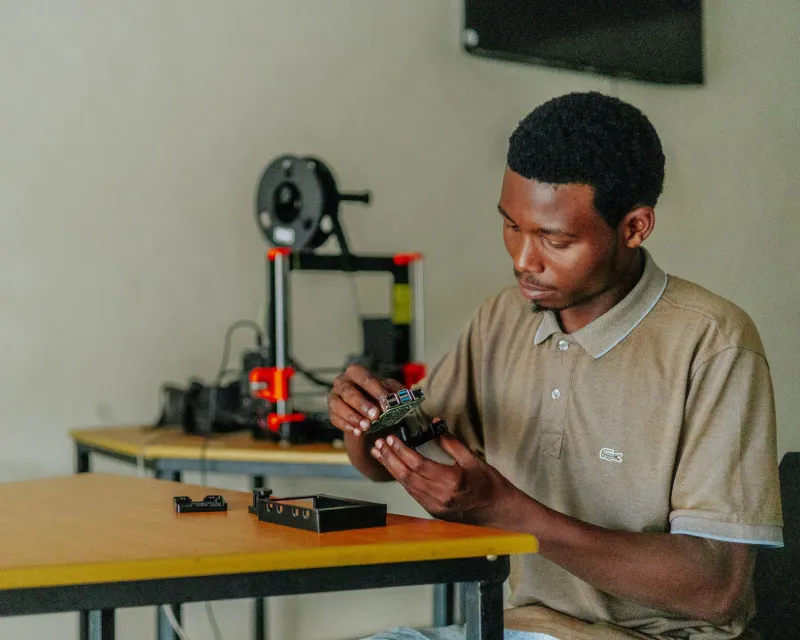
There's something almost poetic about a filmmaker streaming her short films to a growing online audience using a device that costs less than a decent dinner in Brooklyn. No cloud subscription. No licensing fees. No corporate middleman taking a cut. Just a Raspberry Pi, some open-source software, and a whole lot of creative stubbornness.
This is the new face of independent media — and it's being built on a circuit board smaller than your wallet.
The $35 Studio Nobody Saw Coming
For the uninitiated, the Raspberry Pi is a single-board computer developed by a UK nonprofit with the original goal of teaching kids how to code. But somewhere along the way, the creative community got hold of it, and things got interesting fast.
Today, the Pi — particularly the Pi 4 and the newer Pi 5 — packs enough processing power to handle video encoding, audio streaming, local media hosting, and even live broadcasting. We're talking about hardware that fits in your palm running the same kinds of tasks that once required a server rack and an IT department.
For artists operating on shoestring budgets, that's not just convenient. It's genuinely transformative.
Real Creators, Real Setups
Take Marcus Webb, a Portland-based documentary filmmaker who spent years frustrated by the fees and algorithmic gatekeeping of mainstream video platforms. After his third film got buried despite strong audience response, he decided to build his own solution.
"I spent maybe two weekends on YouTube tutorials and Reddit threads," Marcus told us. "By the end, I had a Pi running Jellyfin as my personal streaming server, connected to a custom domain. My subscribers get a password, they log in, they watch my work. No ads. No algorithm. No drama."
His setup cost him under $100 all-in, including the board, a case, a microSD card, and a small external hard drive. Compare that to the recurring costs of managed video hosting platforms that charge creators for bandwidth, storage, and premium features — and the math starts looking pretty compelling.
Then there's Deja Simmons, a Chicago-based jazz musician and visual artist who uses her Pi as the backbone of a live-streaming rig she wheels to venues around the city. She runs OBS Studio on the Pi 5, pipes in her audio interface, and broadcasts directly to her own RTMP server — no Twitch, no YouTube Live required.
"I own my audience now," she said with a laugh. "Like, actually own it. My email list, my stream, my terms."
Breaking Down the Tech (Without the Headache)
You don't need a computer science degree to understand what's happening here. The core idea is pretty straightforward: instead of renting space on someone else's platform, creators are using Raspberry Pi devices to host and deliver their own content.
Here's the basic toolkit most Pi-powered creators are working with:
-
Media Server Software: Apps like Jellyfin, Plex (with a local server), or Kodi let creators organize and stream their video or audio libraries to any device on their network — or, with some port-forwarding magic, to the wider internet.
-
Live Streaming: OBS Studio paired with an RTMP server like Nginx-RTMP turns a Pi into a fully functional broadcast station. Creators can go live to their own servers and embed that stream anywhere they control.
-
Content Delivery: Tools like Nextcloud give creators a self-hosted cloud where fans can download exclusive content, digital art files, or music albums directly — no Dropbox or Google Drive required.
-
Web Hosting: A Pi can run a lightweight web server using Apache or Nginx, meaning your entire portfolio site, store, and streaming page can live on hardware you physically own.
None of this is magic. It takes patience and a willingness to Google error messages at midnight. But the payoff — full control over your creative infrastructure — is something no subscription service can replicate.
Why This Matters for the Creative Class
Let's be real: the economics of being an independent creator in America are brutal. Streaming platforms take massive revenue cuts. Algorithmic changes can tank your reach overnight. A single terms-of-service violation — even a disputed one — can wipe out years of audience-building.
The Pi offers an exit ramp from that dependency, or at least a meaningful backup lane.
For digital artists especially, this kind of ownership is increasingly urgent. NFT hype aside, the question of how artists distribute and monetize their work without handing control to a platform is one the industry hasn't fully answered. A self-hosted Pi setup isn't a complete solution, but it's a real one — tangible, affordable, and entirely yours.
Sam Okafor, a digital illustrator based in Atlanta, uses a Pi to run his own portfolio and print-on-demand integration. "I got tired of Etsy changing their fee structure every six months," he explained. "Now I run WooCommerce on a Pi at home, connected to a print fulfillment API. It's not perfect, but I control it."
The Limitations Are Real — And Worth Knowing
None of this comes without trade-offs, and it'd be dishonest to pretend otherwise.
A home-hosted Pi server is only as reliable as your internet connection. If your ISP goes down or your power flickers, so does your stream. Scaling is also a genuine challenge — a Pi can handle a modest audience, but if your live stream suddenly goes viral, you're going to hit a ceiling fast.
There's also the learning curve. Setting up an RTMP server or configuring SSL certificates for a self-hosted site isn't plug-and-play. The community is incredibly supportive — Reddit's r/raspberry_pi and various Discord servers are goldmines — but you have to be willing to tinker.
And then there's the security question. Running a public-facing server from your home network introduces risks that require ongoing attention. Regular updates, strong passwords, and a basic understanding of firewall rules are non-negotiable.
Building Your Stage, Your Way
At PiMedia, we talk a lot about creative voices finding their stage. What's exciting about the Raspberry Pi movement is that it's not just metaphorical — these creators are literally building their own stages, brick by digital brick.
The democratization of media production has always been a promise that technology makes and then partially breaks. Cheaper cameras, then platform fees. Free distribution, then algorithmic gatekeeping. But something about the Pi feels different — maybe because the control it offers is so complete, so physical, so undeniably yours.
A $35 board sitting on a desk in a Portland apartment is streaming a filmmaker's work to subscribers in thirty states. A musician in Chicago owns her broadcast. An illustrator in Atlanta runs his own store.
That's not a revolution that needs a press release. It's already happening, one blinking green LED at a time.